

Flagship Course
Shooting Incident Analysis and Reconstruction
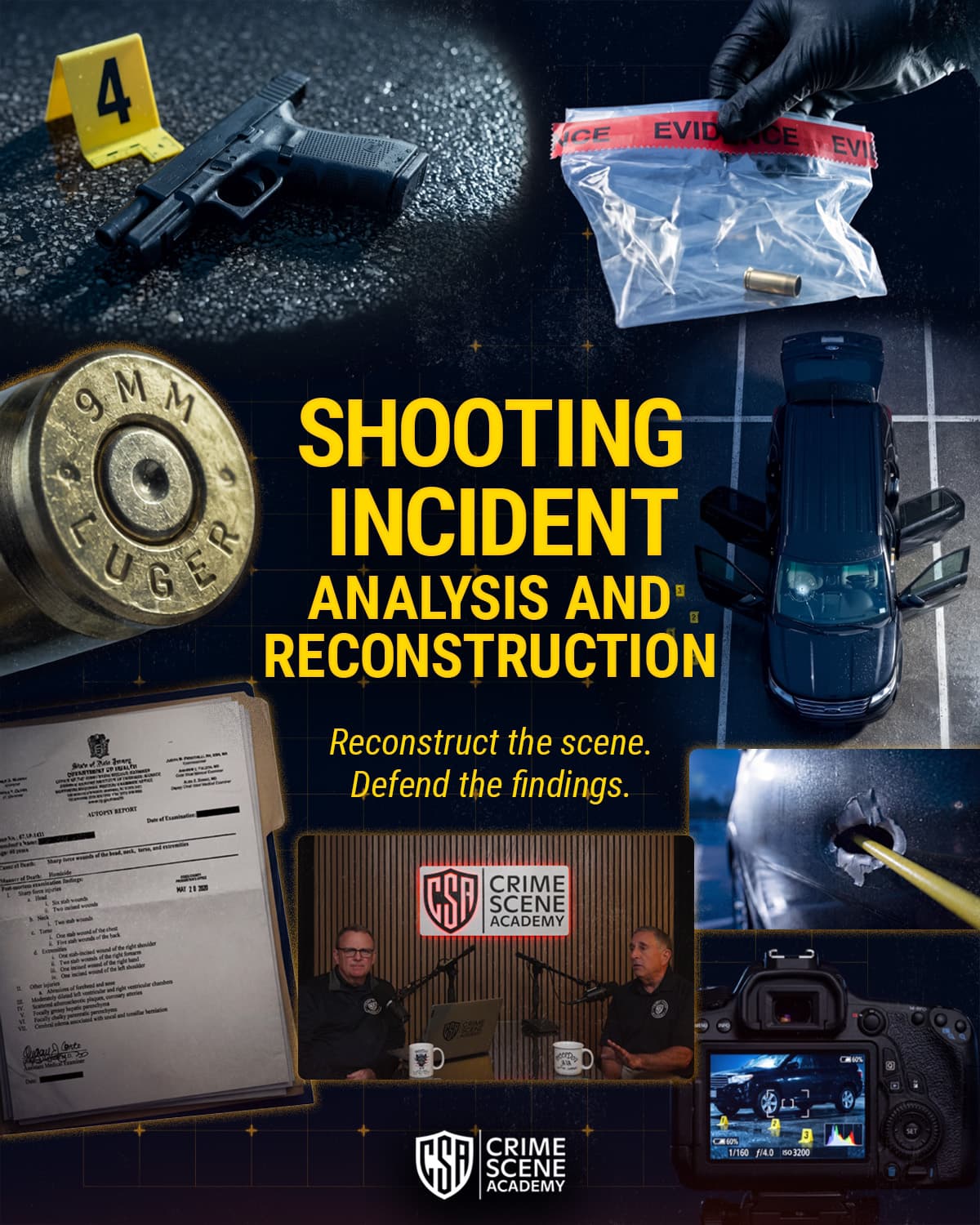
An expert-led online course that teaches investigators how to document shooting scenes, interpret firearm-related evidence, analyze bullet defects and flight paths, and develop objective reconstruction findings that can be explained in reports and court.
Taught by experienced forensic instructors with deep casework, courtroom, and teaching backgrounds.
- Full on-demand course access
- Chapter quizzes + final assessment
- Certificate + Credit Support Packet
- On-demand access
Learning outcomes
What you’ll learn to do
Build a structured approach to shooting scene analysis — from recognizing critical evidence to explaining objective findings under investigative and courtroom scrutiny.
- Recognize and document critical shooting-scene evidence
- Interpret bullet defects, directionality, and angle-of-impact indicators
- Evaluate GSR, wound paths, glass fractures, and scene context
- Connect physical evidence to possible event segments and shooter/target positions
- Avoid unsupported assumptions and confirmation bias
- Prepare clearer reports and courtroom explanations
Promotional preview
Course Preview
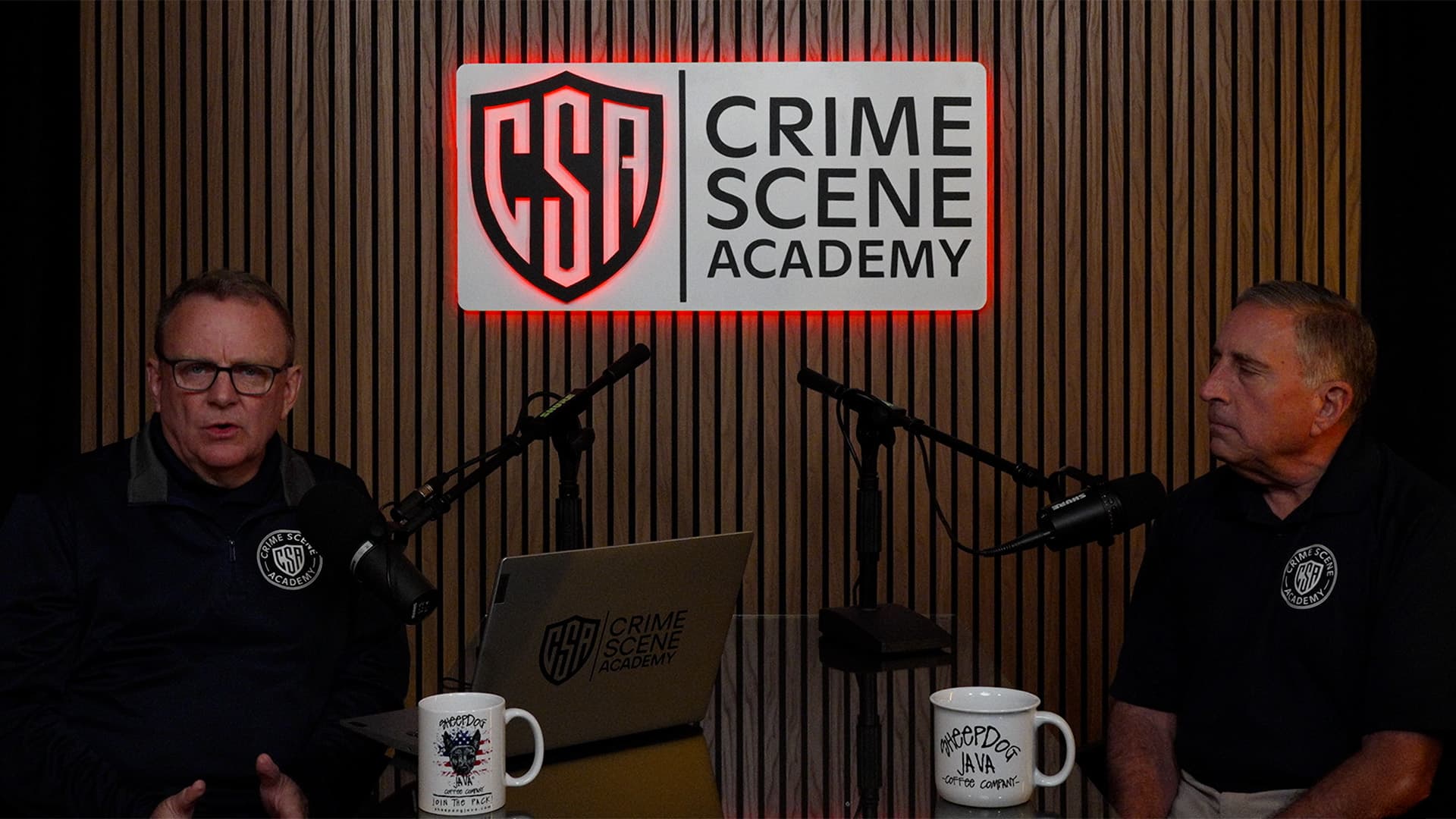
A visual overview of the course, including animated lessons, demonstrations, case study materials, and the practical reconstruction concepts covered throughout the training.
Preview description
A visual overview of the course, including animated lessons, demonstrations, case study materials, and the practical reconstruction concepts covered throughout the training.
What’s included
What the course includes
Animated Visual Lessons
Complex forensic concepts explained through clear motion graphics and visual demonstrations.
Filmed Demonstrations
See practical methods for documenting and interpreting bullet defects, flight paths, and scene evidence.
Real-World Case Studies
Howard Ryan and James Molinaro walk through actual homicide reconstruction reports using redacted materials.
Chapter Quizzes and Final Assessment
Structured knowledge checks reinforce comprehension throughout the course.
Downloadable Case Materials
Students receive redacted reconstruction reports to follow along with the case study discussions.
On-Demand Access
Train on your schedule without travel, lodging, or agency staffing disruption.
Certificate + Credit Support Packet
Receive a certificate of completion and a downloadable documentation packet with instructor CVs and course lesson plan materials to support your own CEU, POST, agency, or professional development credit submission.
Audience
Who this course is built for
- Crime scene investigators
- Detectives and investigators
- Patrol officers responding to shooting scenes
- Forensic personnel
- Prosecutors
- Criminal justice students
- Agency training coordinators
Real casework
See the reconstruction process applied to real casework
The course includes two long-form case study videos featuring Howard Ryan and James Molinaro reviewing actual homicide reconstruction reports. Students see how scene observations, wound information, bloodstain evidence, GSR, cartridge casing locations, body position, and report writing come together in real investigative work.
Case Study 1
A domestic shooting reconstruction where physical evidence, body position, GSR, and bloodstain interpretation are used to evaluate competing explanations.
Case Study 2
A homicide case walkthrough showing how wound paths, movement, ricochet evidence, and scene documentation help reconstruct a sequence of events.
Before you begin
Course Introduction
A short introduction to the mindset and structure behind the flagship course.
Course content
Curriculum
Each module builds from foundational firearm and ammunition concepts toward practical reconstruction, case interpretation, and defensible reporting.
Module 1Introduction
Establishes the purpose of the course: helping investigators approach shooting scenes with a structured, evidence-driven mindset. Students are introduced to the importance of recognizing critical details, connecting evidence to action, and building clear, defensible conclusions.
Module 2Modern Firearms
Covers firearm categories, classifications, actions, components, accessories, caliber/gauge terminology, and common malfunctions. Emphasis is placed on how firearm operation, manual manipulation, trigger pulls, malfunctions, and shooter knowledge can inform reconstruction questions.
Module 3Modern Ammunition
Explains ammunition terminology, cartridge and shotshell components, ignition systems, magazines, cylinders, projectile construction, and common bullet designs. Students learn how bullet design and terminal performance influence defects, wound behavior, penetration, fragmentation, and reconstruction findings.
Module 4Ballistics
Introduces internal, external, and terminal ballistics in practical investigative terms. Students learn what happens from trigger pull through muzzle exit, how bullets behave in flight, and how impact with target materials affects deformation, destabilization, deceleration, fragmentation, wound cavities, and recovered evidence.
Module 5Gunshot Residue
Examines primer residues, propellant residues, metallic residues, detection methods, limitations, and range-of-fire estimation. The module emphasizes what GSR can and cannot prove, how residue patterns may support muzzle-to-target distance, and why timely documentation and collection matter.
Module 6Scene Processing and Documentation
Focuses on systematic shooting scene processing, safety, evidence recognition, photography, written documentation, evidence collection, and chain of custody. Students learn why thorough documentation of firearms, casings, projectiles, bullet defects, biological evidence, trace evidence, and related materials is essential to later reconstruction.
Module 7Bullet Defect Terminology
Builds the working vocabulary needed to describe and interpret bullet impacts. Topics include target types and classes, trajectory vs. flight path, perforation, penetration, ricochet, entrance and exit defects, corresponding defects, keyholes, spall, leading edge, bullet wipe, lead-in marks, pinch points, cone fractures, secondary projectiles, terminus, and point-of-impact documentation.
Module 8Glass Fracture Analysis
Covers plate, tempered, and laminated glass behavior when struck by gunfire. Students learn how radial, concentric, cone, and dicing fractures may help determine point of impact, directionality, sequencing, and the importance of preserving fragile glass evidence before it is altered or lost.
Module 9Analysis of Bullet Defects
Teaches practical methods for analyzing bullet defects to determine directionality, angle of impact, and reconstructed flight paths. Topics include the two-defect method, lead-in method, ricochet defects, horizontal and vertical angle components, movable targets, the three-point requirement, horizontal surface analysis, area of convergence, and area of origin limitations.
Module 10The Human Body as a Target
Explores the human body as a movable and dynamic target in shooting reconstruction. Students learn how wound tracks, body position, movement, survivability, autopsy reports, treatment reports, clothing, GSR, stippling, bloodstain evidence, and molecular ballistics may help determine reasonable or unreasonable body positions at the time of gunfire.
Module 11Scene Reconstruction
Brings the course concepts together into an objective reconstruction process. Students learn how to evaluate physical, forensic, medical, video, and contextual evidence through an unbiased lens; apply inductive and deductive reasoning; reduce bias; use linear sequential unmasking; develop and test hypotheses; segment complex events; and present supported findings.
Module 12Real-World Case Studies
Howard Ryan and James Molinaro walk through actual homicide reconstruction casework using redacted reconstruction materials. These case studies show how scene observations, wound paths, bloodstain evidence, GSR, cartridge casing locations, body position, movement, graphics, report writing, and courtroom explanation come together in real investigations.
Module 13Final Assessment
A final knowledge check reinforces the major course concepts and confirms student understanding of key terminology, evidence categories, documentation practices, reconstruction principles, and practical investigative reasoning.
Introductory Launch Price
$499
- Full on-demand course access
- Animated lessons and filmed demonstrations
- Chapter quizzes and final assessment
- Two real-world case study walkthroughs
- Redacted reconstruction reports for follow-along
- Certificate + Credit Support Packet
- Lower total cost than travel-based training
Course Team
Instructors
Instructor
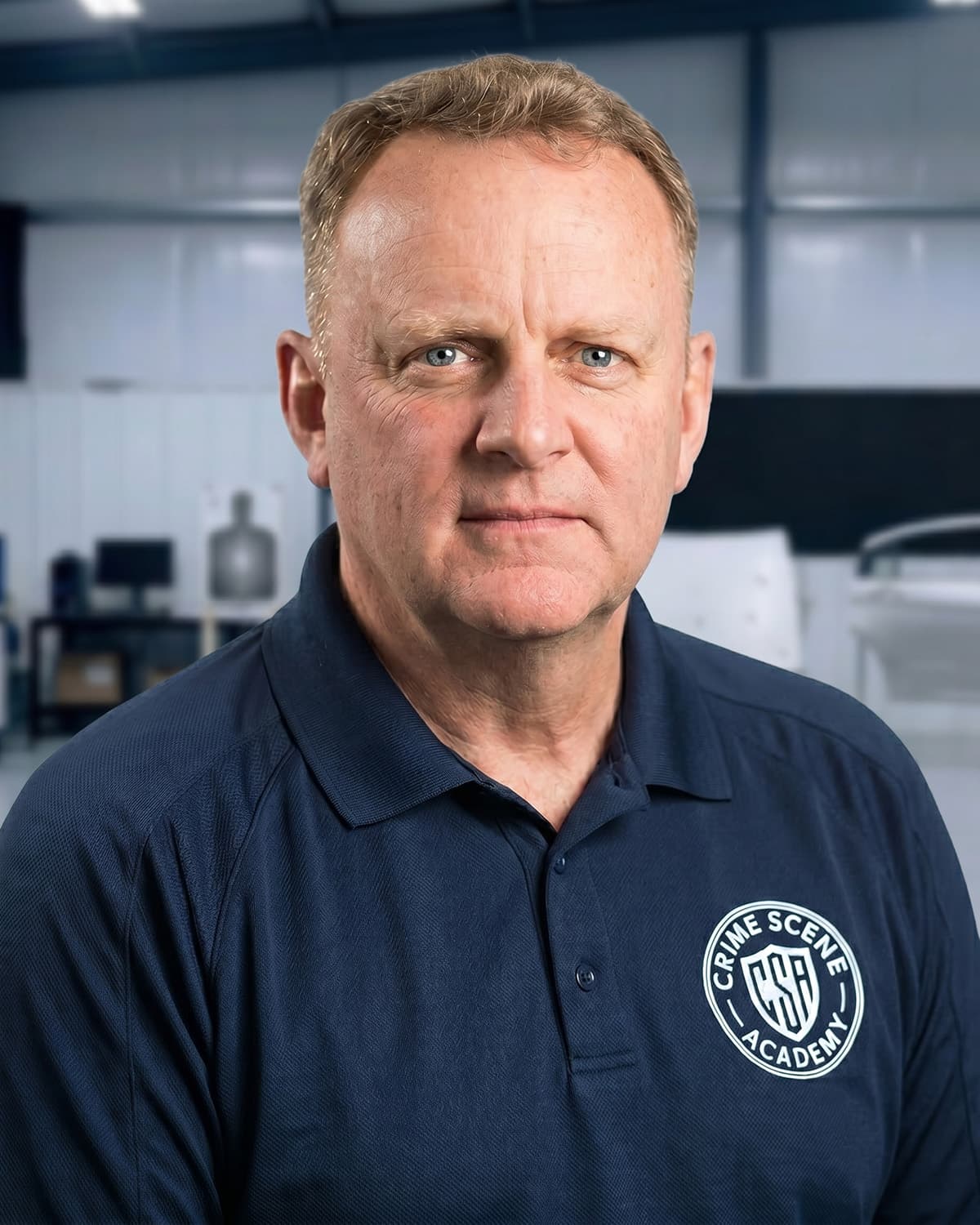
Howard Ryan
Instructor — Shooting Incident Analysis and Reconstruction
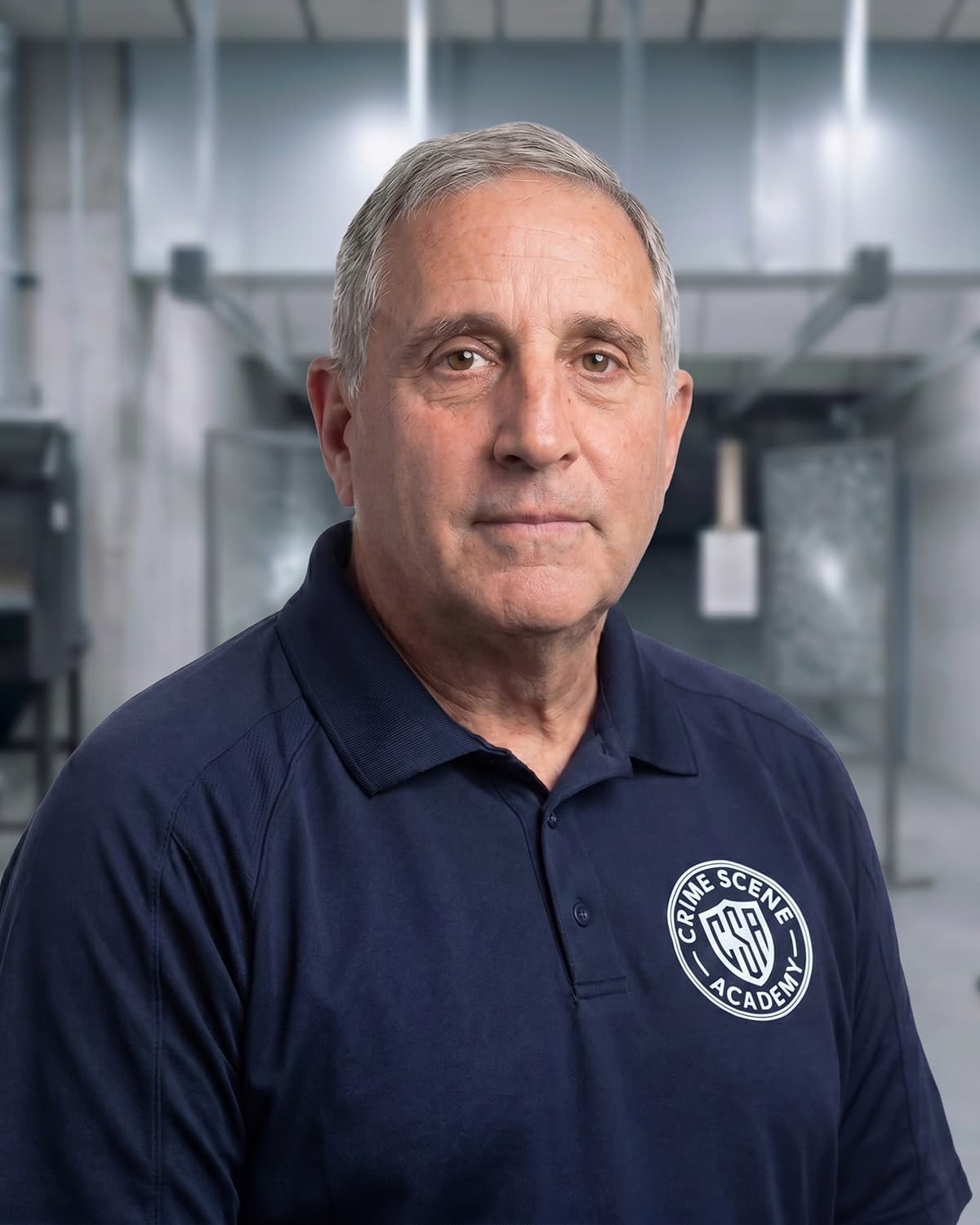
Mr. Ryan retired in January 2013 as a lieutenant from the New Jersey State Police after a twenty-five-year career, followed by two years as the Chief Warrant Officer for the Morris County, NJ, Sheriff’s Office. During his over twenty-seven years of sworn crime scene investigative experience, he has conducted over 3,000 scene investigations, including hundreds of homicides, death scenes, and shooting investigations. He has consulted on major cases in dozens of states and testified numerous times as an expert witness in bloodstain pattern analysis, crime scene reconstruction, shooting analysis, and scene processing in courtrooms throughout the United States.
Mr. Ryan owns Highlands Forensic Investigations and Consulting and is a co-owner of the e-learning platform, Crime Scene Academy. He serves as an instructor in shooting analysis and reconstruction for the National Forensic Academy at the University of Tennessee. He is the creator and host of “Under the Yellow Tape Podcast,” which features an investigator’s perspective on controversial cases worldwide. Mr. Ryan provides consultation, advisory, and instructional services to federal, state, county, and local police departments throughout the United States and abroad on various crime scene-related disciplines, investigative bias, and PTSD among Crime Scene and Homicide investigators.
Experience highlights
- Over 27 years of sworn crime scene investigative experience
- More than 3,000 scene investigations conducted
- Expert witness testimony in courtrooms throughout the United States
- Instructor for the National Forensic Academy at the University of Tennessee
Instructor
James Molinaro
Instructor — Shooting Incident Analysis and Reconstruction
James Molinaro is a nationally recognized forensic expert and instructor with over 37 years of crime scene and forensic investigative experience. He retired as a Lieutenant from the New Jersey State Police after a 26-year career and later served as a Detective with the Hunterdon County Prosecutor’s Office Major Crimes – Crime Scene Unit.
Molinaro has conducted more than 3,000 scene investigations, including homicides, death scenes, and shooting investigations. He has testified as an expert witness in crime scene reconstruction, shooting and bloodstain analysis, and scene processing in federal and state courts.
Experience highlights
- 37+ years of forensic investigative experience
- Retired Lieutenant, New Jersey State Police
- 3,000+ scene investigations
- Expert witness in reconstruction, shooting analysis, and bloodstain analysis
- Instructor, Crime Scene Academy and National Forensic Academy
Certificate of Completion and Credit Support Packet
Students who complete the required lessons, chapter quizzes, and final assessment will receive a verified Crime Scene Academy Certificate of Completion plus a Continuing Education Support Packet with instructor CVs and course lesson plan materials to support CEU, POST, agency, or professional development credit submissions through their own agency, state, board, or certifying body. Completion records are maintained by Crime Scene Academy so agencies, employers, or authorized parties can verify training completion when needed.
Need to train multiple personnel?
Agencies can request information about group access, enrollment planning, completion documentation, and training coordination. Agencies may reduce total training costs by an estimated 65–80% compared with traditional in-person training, depending on travel, lodging, overtime, backfill coverage, and scheduling needs.
Request Agency Information